
Essentials
- Remove the tick as soon as you can
- Use a proper tick remover, but if you don’t have one, a fine thread can be used – see below
- Do not use eyebrow tweezers – that may squash more tick saliva into you
- Don’t try to suffocate the tick with Vaseline – just take it off
- It doesn’t matter if you leave a small bit of tick in your skin – your body will get rid of it.
How do I remove a tick?
Your main aims are to remove the tick promptly, to remove all parts of the tick’s body and to prevent it releasing additional saliva or regurgitating its stomach contents into your bite wound.
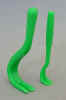
DO use a proprietary tick removal tool* (available from this website or many vets and pet shops), and follow the instructions provided. Two common types of removal tool available are illustrated on this page. With these tools you can remove the tick without squashing the body.
The hook is designed to be twisted to facilitate removal, but it makes no difference which way you twist.
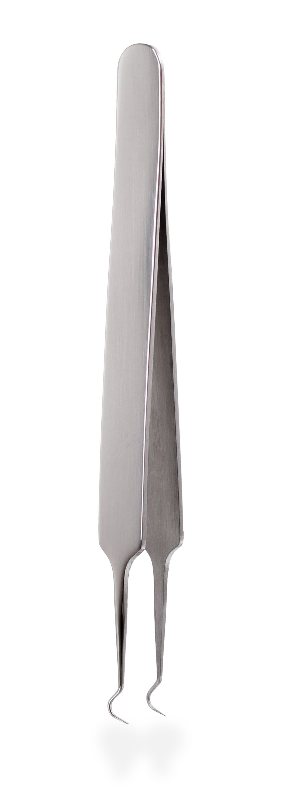
With the pointed tweezers (not blunt eyebrow tweezers!) grasp the tick as close to the skin as possible; without squeezing the tick’s body, pull the tick out without twisting (it is difficult to twist tweezers without separating the tick’s head from its body) – there may be considerable resistance.
If no tools are available, rather than delay use a fine thread, something like cotton or dental floss. Tie a single loop of thread around the tick’s mouthparts, as close to the skin as possible, then pull upwards and outwards without twisting.
DO clean the site of the tick bite with soap and water afterwards.
DO save the tick in a container in case a doctor asks for evidence that you have been bitten (label it with date and location). The UK Health Security Agency runs a scheme to investigate ticks – see below.
DO NOT squeeze the body of the tick, as this may push infected tick saliva into your body.
DO NOT use your fingernails to remove a tick. Infection may enter via any breaks in your skin, e.g. close to the fingernail.
DO NOT try to burn the tick off, apply petroleum jelly, nail polish or any other chemical. Any of these methods can cause discomfort to the tick, resulting in saliva release.
Disposing of the tick
After you have removed your tick, keep it in a sealed container and send it to the UK Health Security Agency Tick Surveillance Scheme. They will identify it for you and add the information to their database.
Alternatively, fold it in a strip of sticky tape and place it in the waste. Be aware that engorged ticks will contain potentially infected blood, which may splatter when crushed. Do not crush the tick with your fingers.
Now what?!
Don’t worry! The risk from a UK tick bite is very small and you don’t need treatment unless you develop symptoms of illness. The red mark left by the tick bite will fade over a couple of days, so perhaps just make a note on a calendar or diary so if necessary you can tell your doctor when the tick bite was and where it was on your body. Lyme disease symptoms appear on average about 2 weeks after the tick bite.
If you have left a small part of the tick mouthparts in your skin, which can sometimes happen, medical advice is just to leave it and your body will deal with it. You can do more damage digging around with a needle to try to get it out, and this can be particularly distressing for children.
Travelling abroad? Be aware!
There are different ticks in other countries and they may carry different diseases.
In Australia, the tick most likely to attach to humans can induce an anaphylactic shock, It is called the Paralysis Tick because some people’s immune system reacts to the tick saliva which can be released during feeding if the tick is disturbed. This is a rare reaction, but the advice in Australia is to use a spray to freeze the tick off, rather than using a tick remover.
 Printer Friendly